



Architecting a Hyperscale Cyber Attack and Defense: What We Learned
Everyone says AI attacks are coming. No one had run a Hyperattack with a Hyper Defense at this scale. So we did, live, with Armadin. Opinions don't defend anything; we wanted evidence, not predictions.
TL;DR
- A fully autonomous AI swarm attacked a live institution for three days. TENEX.ai defended in real time.
- It's not the alerts. It's the scale. 1 in every 13,338 events was the attacker.
- You can't filter your way out, and governance can't change with every model.
- The answer: six steps to fully agentic, human-led security operations, plus an eight-question readiness checklist.
Red swarm vs. blue swarm
Kevin Mandia, founder of Mandiant, founded Armadin with co-founders Travis Lanham, Evan Peña, and David Slater. They are elite red teamers, security architects, and AI builders who create always-on agentic swarms that chain vulnerabilities as attackers do. Their goal: know every path in. TechCrunch recently covered their $255.5M Series B, at a valuation of more than $2.5 billion.
Eric Foster, co-founder of Cyderes and a three-time CISO, founded TENEX.ai with co-founders Ryan Shreve, Edwin Solis, and Venkata Koppaka. Together, they bring decades of security operations experience across Google Cloud Security, Cyderes, and the founding engineering team behind Google’s core SecOps stack. We build AI-native, human-led security operations, where agents do the work and named analysts own every consequential call. Their goal: see every event, not a sample.
Armadin ran the Hyperattack, the red swarm: 26,000 agents with elite red-team tradecraft, probing every host and service throughout the three-day exercise. TENEX.ai ran the Hyper Defense, the blue swarm. We watched every event, not a sample. We triaged every alert, rebuilt every attack path with evidence, and named analysts owned every consequential call. Red AI against blue AI, in production.
The clock was already broken
The median time from an initial access broker to a secondary group was 22 seconds. 29 minutes for eCrime breakout and lateral movement. 14 days of dwell time from compromise to detection. That was before AI joined the attack. Plan as if you are permanently unpatched.

Sources: CrowdStrike 2026 Global Threat Report, Mandiant M-Trends 2026.
Then, in one quarter, theory became real. Zero-days aren't new. What changed is the frequency. AI now writes exploits in minutes, chains them together rapidly, and engineers new ones. Hundreds of agents ran multi-day attacks. Attackers used AI to build agents. Open models nearly match frontier models at exploits. Elite offense is available to anyone, and defenders have months, not years. So we stopped talking and tested it.
The Hyper Purple Team exercise
A global institution with a mature SOC. Live production, not a lab. Zero knowledge, no credentials. Three days of self-directing swarms. Armadin attacked. TENEX defended. The instruction: find exploitable risk. People governed both sides throughout.
Armadin trained its agents in elite Mandiant red-team tradecraft, and the swarm worked in five moves:
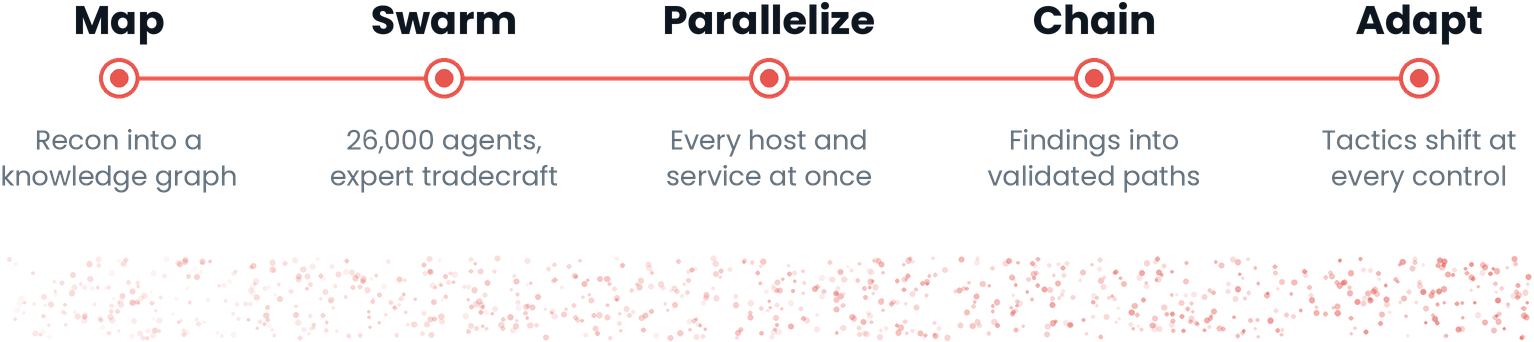
The target list grew to over 25,000 hosts and services, with 17 million actions in three days across billions of tokens. In the future, an attack like this will cost even less.
Learning 1: It's not the alerts. It's the scale.
On one side, what came at us. On the other, what the defense actually saw.
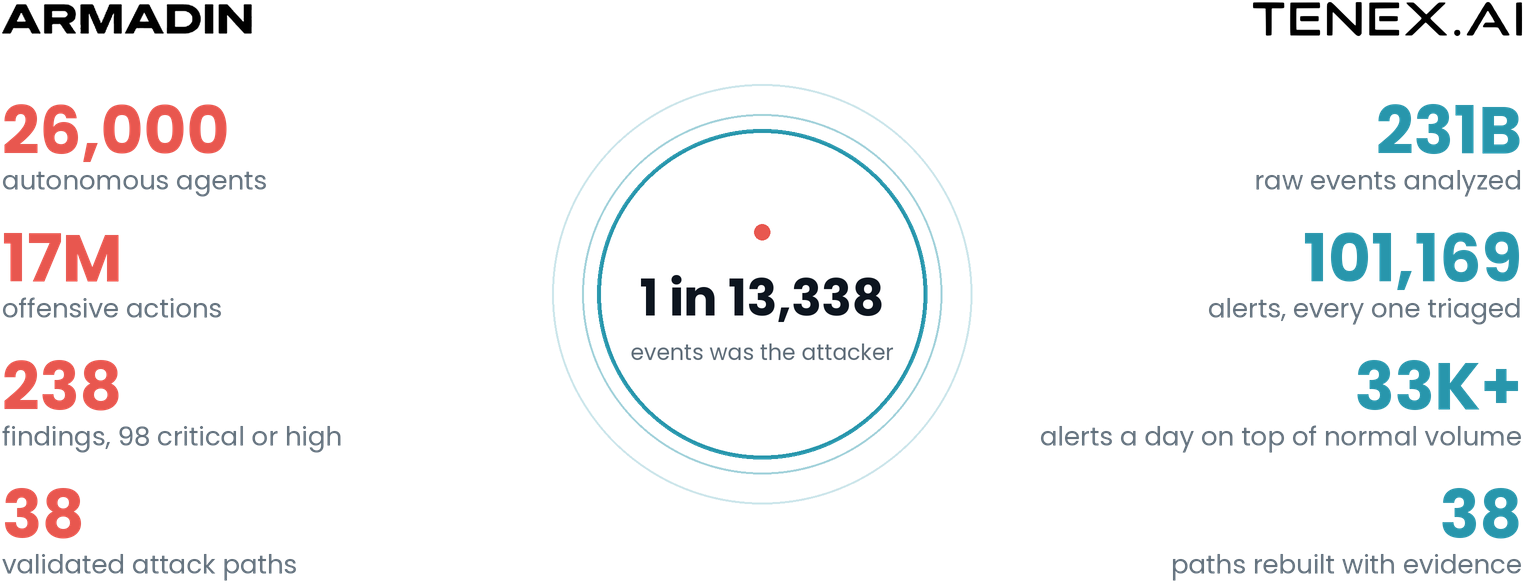
That's more than 33,000 alerts per day on top of existing alert volume, and all 38 paths were reconstructed with evidence. But the hard part wasn't the alerts. It was the volume underneath. Not to cause any fear, but imagine facing five Hyperattacks in a day.
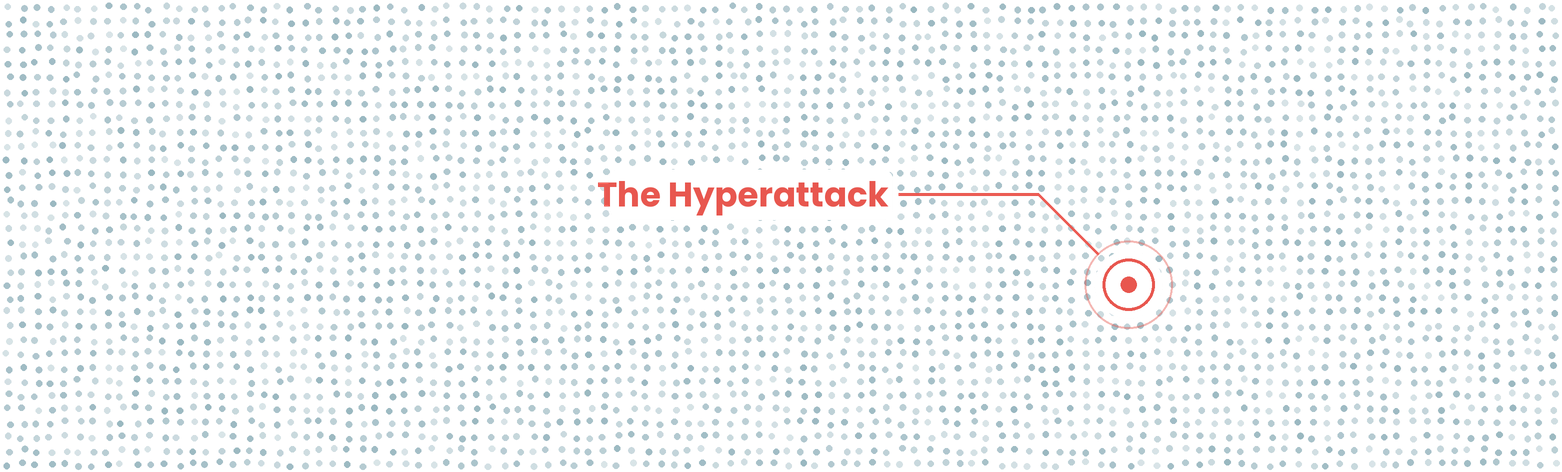
Every dot is an event. One of them is the Hyperattack. It wasn't hidden. It was buried. Sample the stream, and you can miss it.
Where traditional SecOps breaks
For thirty years, we filtered down: logs, alerts, triage, then people. It was our only option. Every stage drops volume and context.
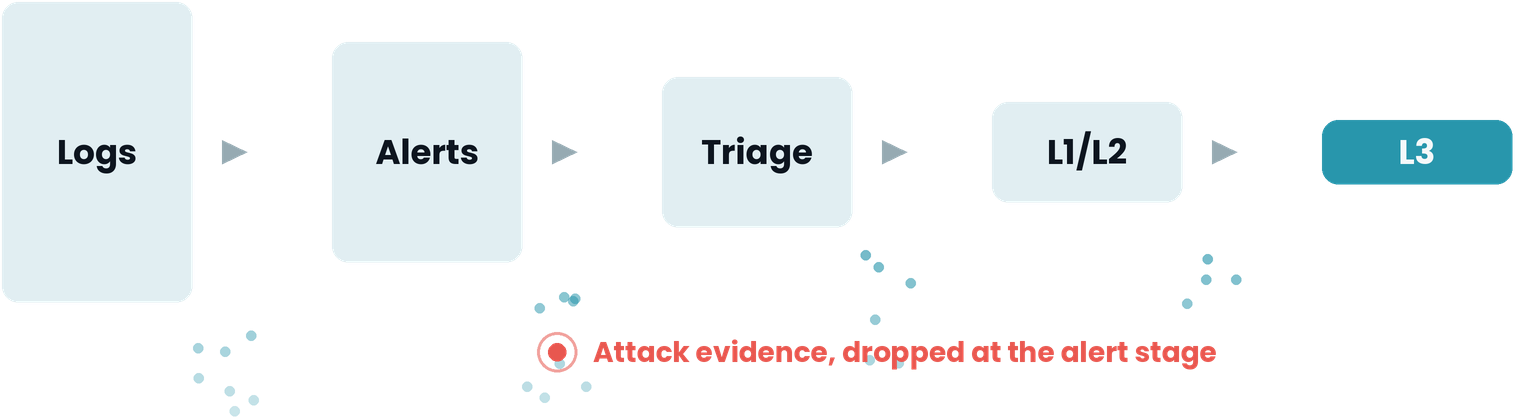
The swarm chained paths through controls. Detections fired, but were buried. You can't investigate evidence you never collected, and you can't find evidence that's buried. Many exposures weren't even CVEs. No human team could work this volume. It goes after everything at once, so you have to look at everything.
How the defense worked
Read it bottom up. Coverage is the floor, not the goal.
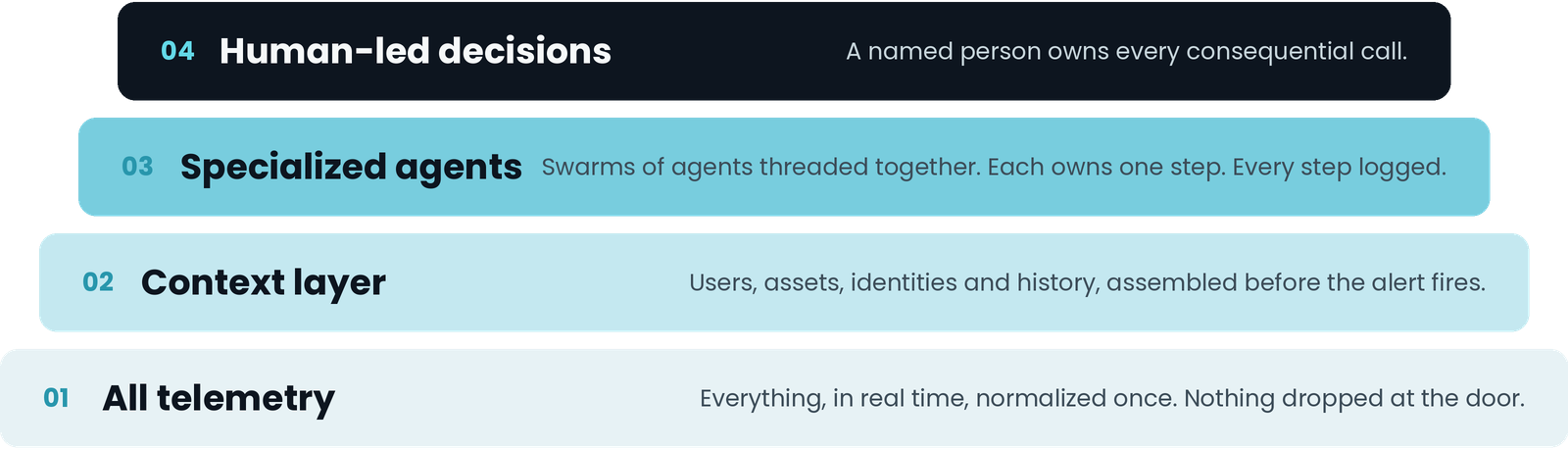
In practice, it is one continuous loop of people, process, and technology, not a set of features: telemetry in, triage, investigation, response, and human-on-the-loop feedback that closes back into detection engineering. Agents do the volume around the analyst, and your SIEM stays the system of record. Ask any provider which boxes they cover.
Learning 2: The economics flip
For the attacker, the cost of each extra attempt keeps falling, so they stop choosing targets. No target is too small, too obscure, or too well-defended to try. For the defender, it runs the other way: agentic security operations means inference on every alert, continuously, and Gartner forecasts more than a fivefold rise in inference cost per agentic workflow through 2028.
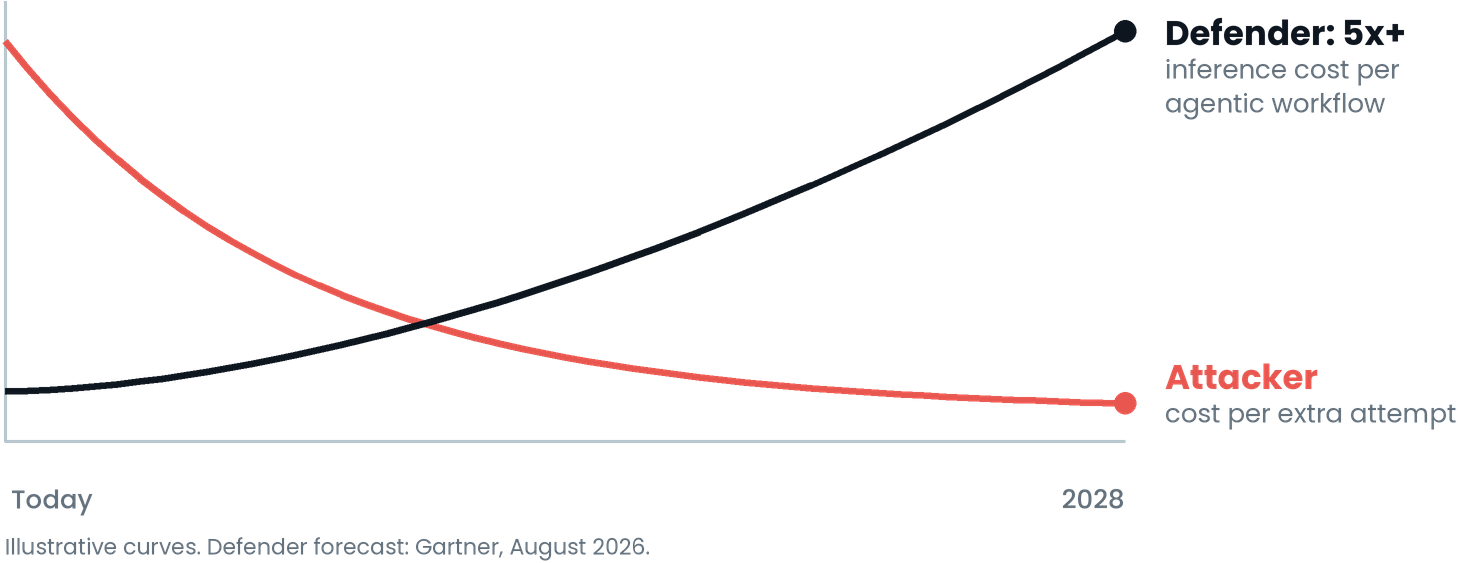
You can't answer this by blindly filtering, because evidence you drop is evidence the attacker can hide in. You answer it architecturally: context assembled once and reused, and cheap precedent matching before expensive investigation. Design for cost from day one. When you evaluate providers, ask whether they price for outcomes or for raw token volume.
Learning 3: Governance and controls don't change
Models keep changing. Governance can't.
- Pin: production model versions are fixed. Upgrades are deliberate.
- Evaluate: new models are tested on known-correct cases, against senior analysts.
- Promote: changes go live with a record of what was tested and why.
- Attack: retest every generation against the latest AI-driven attack.
As Eric Foster, CEO of TENEX.ai, says: “Machine-speed attacks cannot be answered with human-speed workflows.” The CISO now reports status against models and explains every agentic outcome.
The blueprint
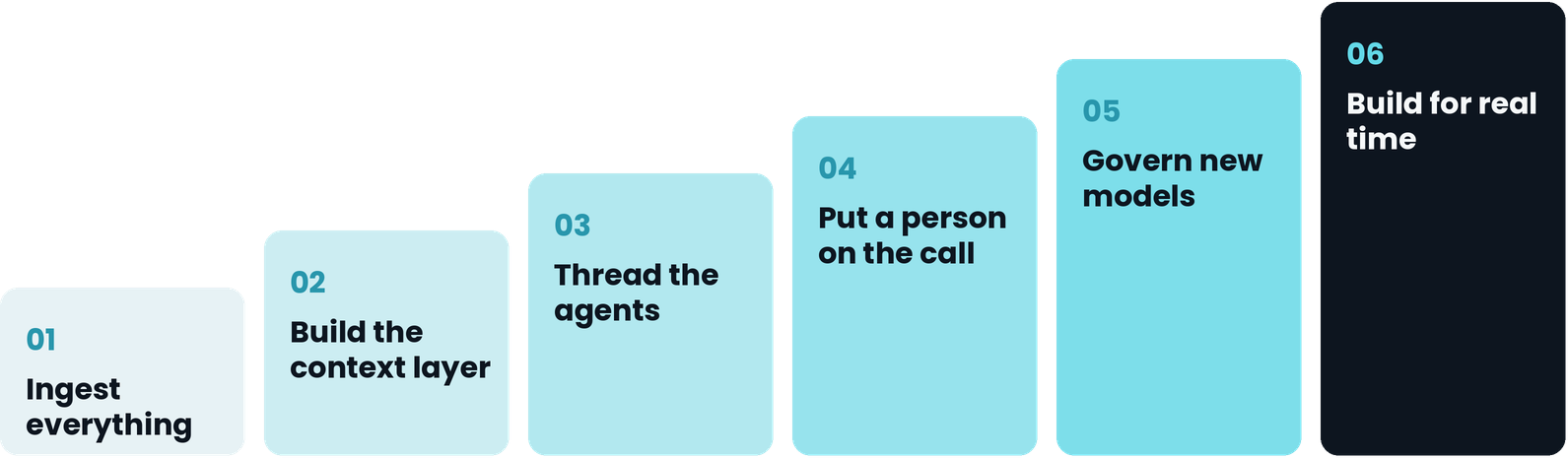
- Ingest everything, normalize once. Stop filtering at the door. Telemetry in Google Cloud SecOps, normalized to UDM.
- Build the context layer first. A living graph of users, assets, and identities, enriched with Google Threat Intelligence.
- Thread the agents, one step each. An orchestration harness. Each agent owns one step and logs it.
- Put a person on the call. Named owners for consequential calls. Response runs as pre-authorized SOAR playbooks.
- Govern every new model. Pin versions, test against known-correct cases, promote with a record.
- Build for real time. From logs to real-time context and correlation, explainable by design.
Attack meets defense
A swarm test alone tells you you're exposed, but not whether your SOC would see it. A swarm defense alone is a claim, not evidence. Together: Armadin finds and validates every path in, and TENEX watches every event and investigates 100% of alerts. You see what your SOC saw, what the blue swarm saw, and the gap. “Are we ready?” becomes a number with an owner.
Your take-home
Eight questions, one copy per SOC. Record an owner and the evidence. Start with telemetry, not alerts. Blank answers are your gaps.
- Telemetry volume you can analyze today, and where it breaks
- Share of data and alerts analyzed versus sampled or dropped
- How related activity becomes one investigation
- Where AI agents act and where analysts decide
- How agent decisions are explained and reviewed
- Time from first signal to a defensible conclusion
- When you were last tested against an AI-driven attack
- What changed after that test, and how it was retested
How to work with us
Start where you are. All three paths run on the SIEM you already have, Google Cloud SecOps or Microsoft Sentinel, and each includes everything in the one before it.
- Optimize: your stack, continuously optimized. TENEX operates and improves your platform.
- Agentic Overwatch: TENEX strengthens your SOC. AI investigations and TENEX experts add capacity. Your team retains SOC ownership.
- Agentic MDR: TENEX is your SOC. 24/7 managed SOC coverage, owning case operations within the agreed scope.
It wasn't the alerts. It was the scale. Look at everything, with people owning the calls. Thanks to Armadin for attacking us.
Download the Hyperattack readiness checklist 1-pager
Contact Sales with your results
Keep Up with TENEX.AI
Press Releases and Company News