

Every security vendor has AI now. Ask for the evidence behind one closed alert, then five things you can open and verify yourself.
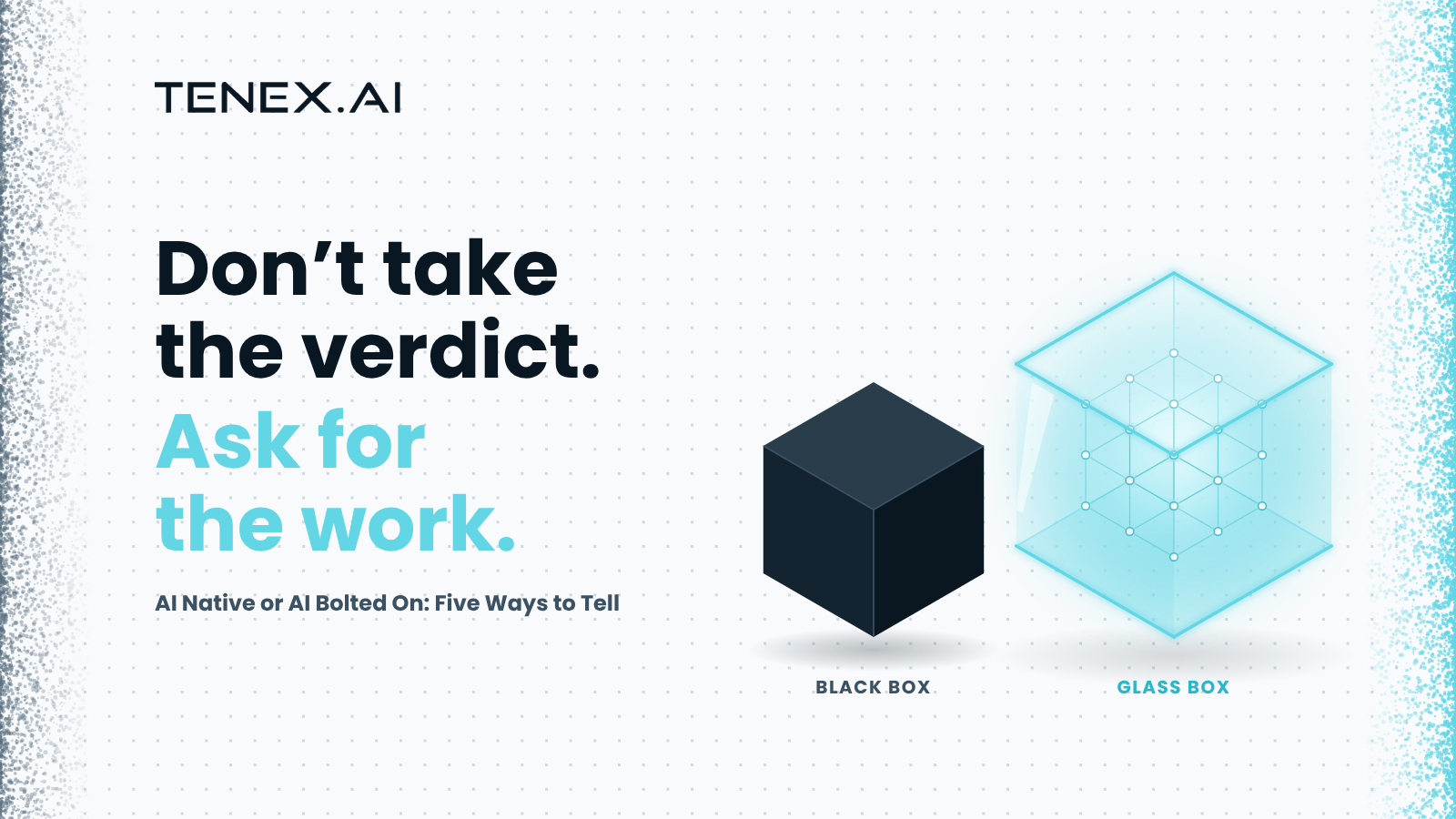
Every security vendor has AI now. It is on every slide, in every demo, and in every renewal pitch. The demos look alike. So start with a question you can check: show me the evidence behind one closed alert.
REGISTER FOR ON-DEMAND WEBINAR
TL;DR
- The useful question isn't whether a product uses AI. It's what you can inspect.
- A verdict tells you what was decided. The work shows you why.
- Start with one test: ask for the evidence behind one closed alert.
- Then ask for five things you can open and check yourself.
- Get the answers in writing.
A verdict or the work
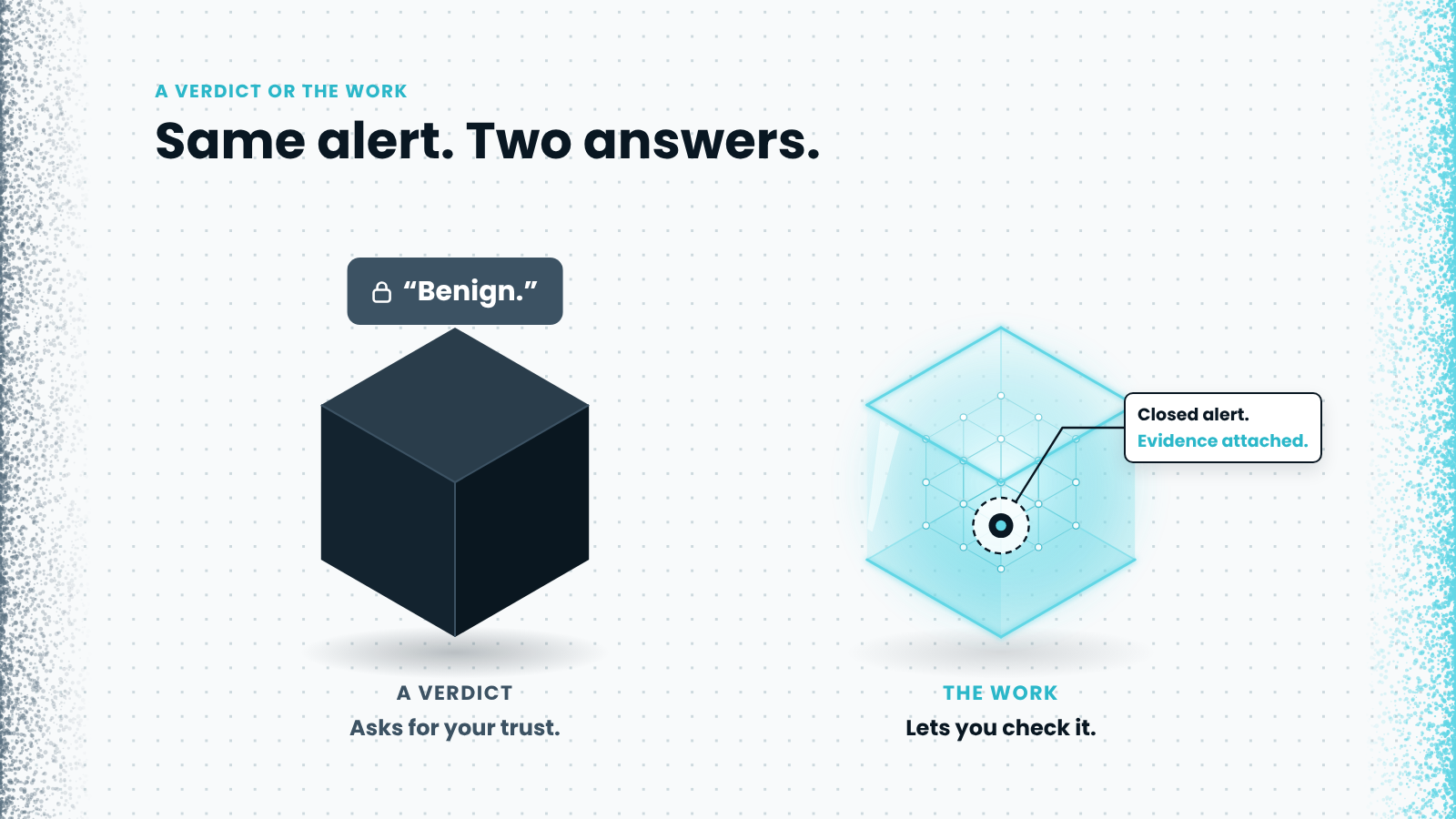
Ask an AI security tool about a closed alert, and you get one of two things. A verdict: "Benign." Or the work: the signal, the evidence, the steps, the reasoning, and who signed off. A verdict asks for your trust. The work lets you check it.
Why how it's built matters
What an AI can show you depends on what it could see when it decided. When AI is added after the filters and handoffs, it reasons on the context that reached it. When the data model is built for the agents, it assembles context before the alert exists and records each step as it happens. That's how we built TENEX.AI.
Don't take architecture on faith, ours included. Ask what the AI could see when it decided, then ask to see it. As we learned in the AI Hyperattack blog and webinar, your SOC's success may depend on it.
What the work looks like
Here is one closed alert, step by step. This is an illustrative example, not an actual customer case.
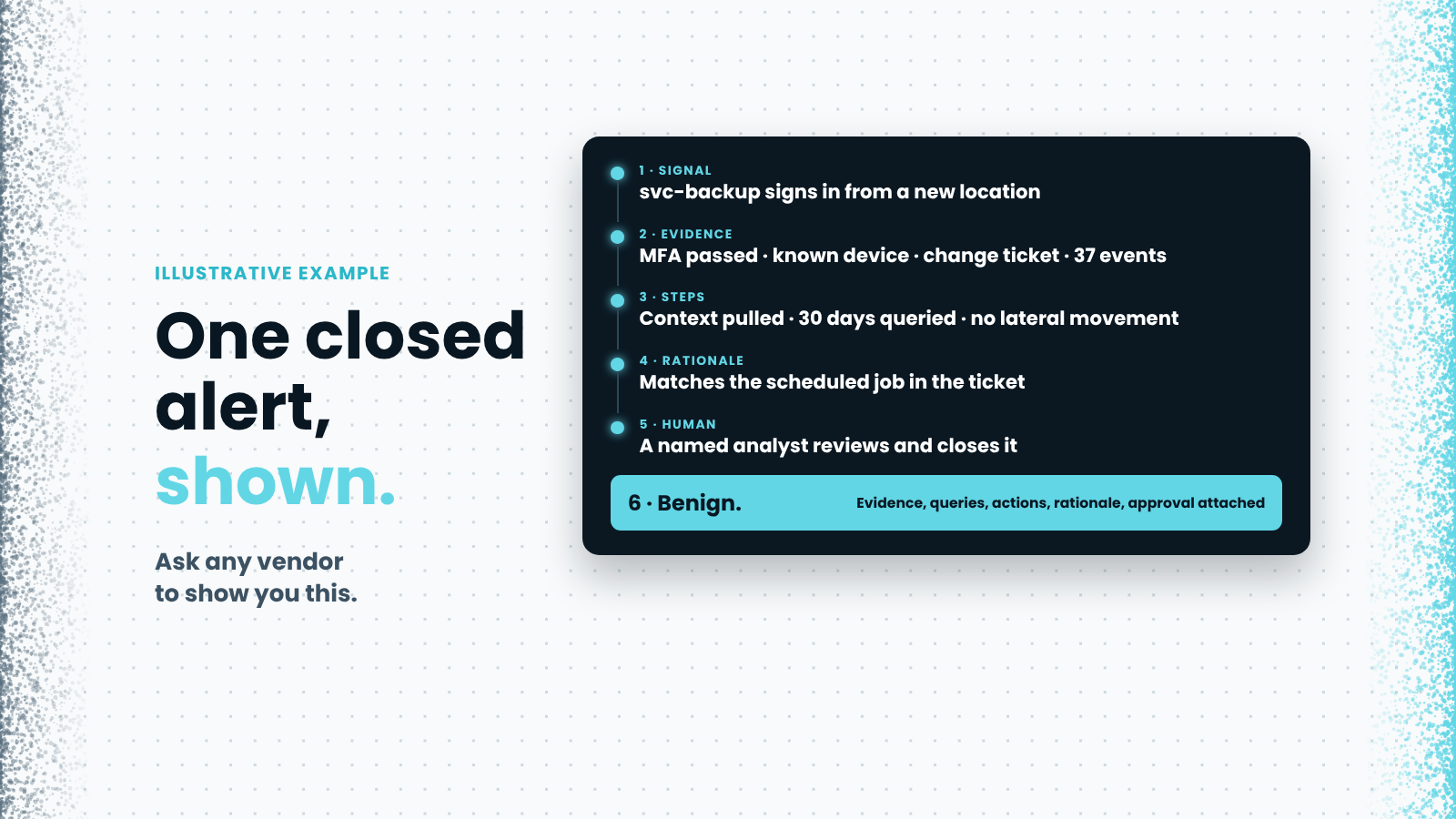
- Signal: a service account signs in from a new location.
- Evidence: MFA passed, known device, an open change ticket for a scheduled job, 37 related events.
- Steps: identity, device, and change context pulled; 30 days of activity queried; no lateral movement found. Each step logged with its query.
- Rationale: the location matches the vendor region in the change ticket, with no new privileges.
- Human: a named analyst reviews the evidence and closes the case.
- Outcome: benign, with every artifact attached.
That's a glass-box outcome. You can open it, question it, and keep it.
The test: five ways to tell
Start with one question: show me the evidence behind one closed alert. Then ask any vendor to show you these five.
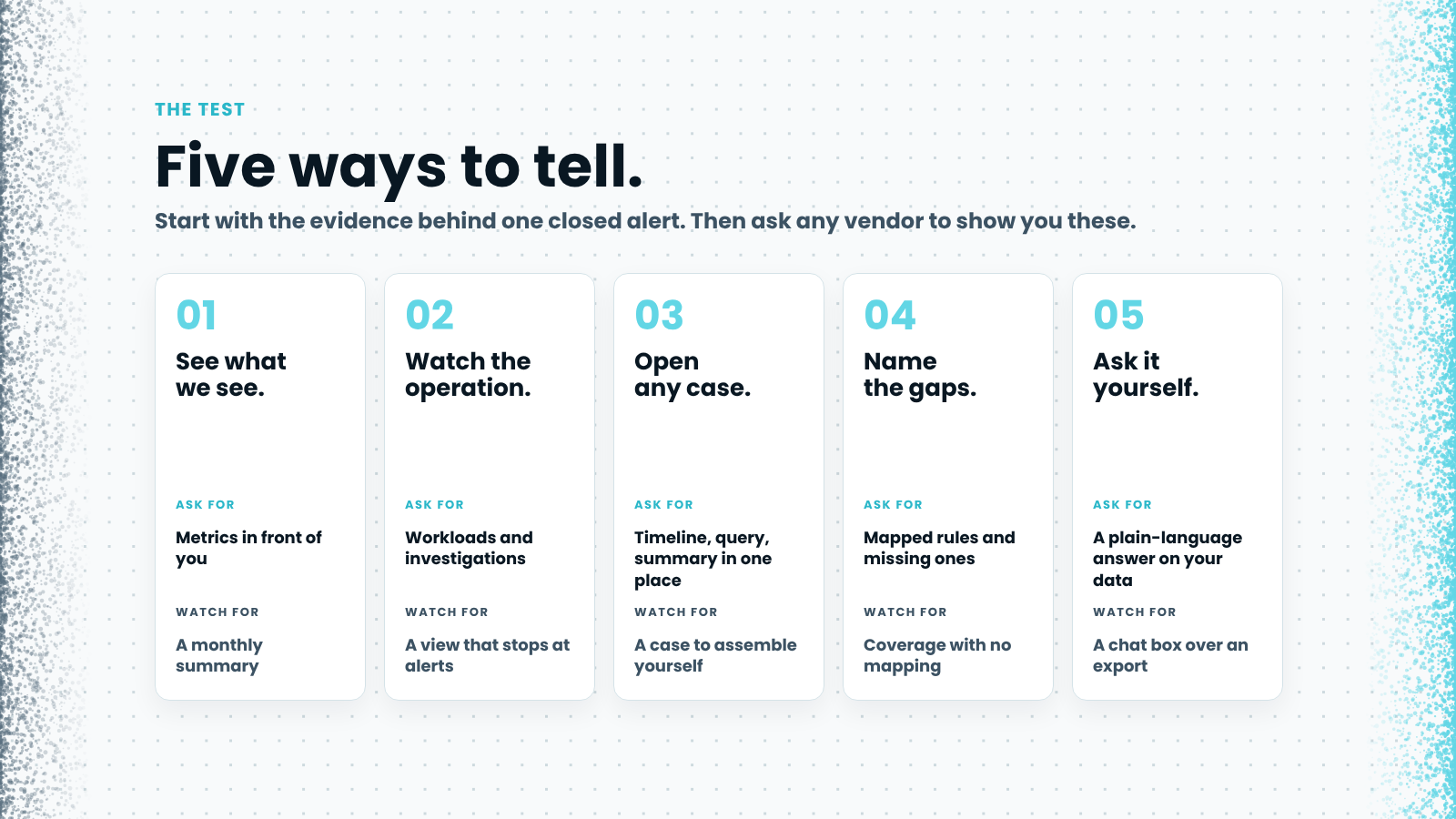
- See what we see.
Ask for: Coverage, speed, and efficiency metrics in front of you.
Watch for: A monthly summary in place of numbers you can check.
In TENEX.AI: Customer Portal
- Watch the operation.
Ask for: Alert workloads and active investigations, top down.
Watch for: A view that stops at the alert queue.
In TENEX.AI: Customer Analytics Dashboard
- Open any case.
Ask for: The timeline, the query, and the summary in one place.
Watch for: A case handed back for you to assemble.
In TENEX.AI: Intelligence Hub
- Name the gaps.
Ask for: Which MITRE ATT&CK techniques have mapped detection rules, and where rules are missing. Then ask which mapped rules have been tested.
Watch for: Coverage claims with no mapping behind them.
In TENEX.AI: MITRE ATT&CK Heat Map
- Ask it yourself.
Ask for: A plain-language question and an answer on the data.
Watch for: A chat box over an export.
In TENEX.AI: Ask TENEX.AI
All five are available in TENEX.AI today.
What to ask for in the record
For every decision, ask for five artifacts you can inspect: the evidence, the queries, the actions taken, the rationale, and the approvals.
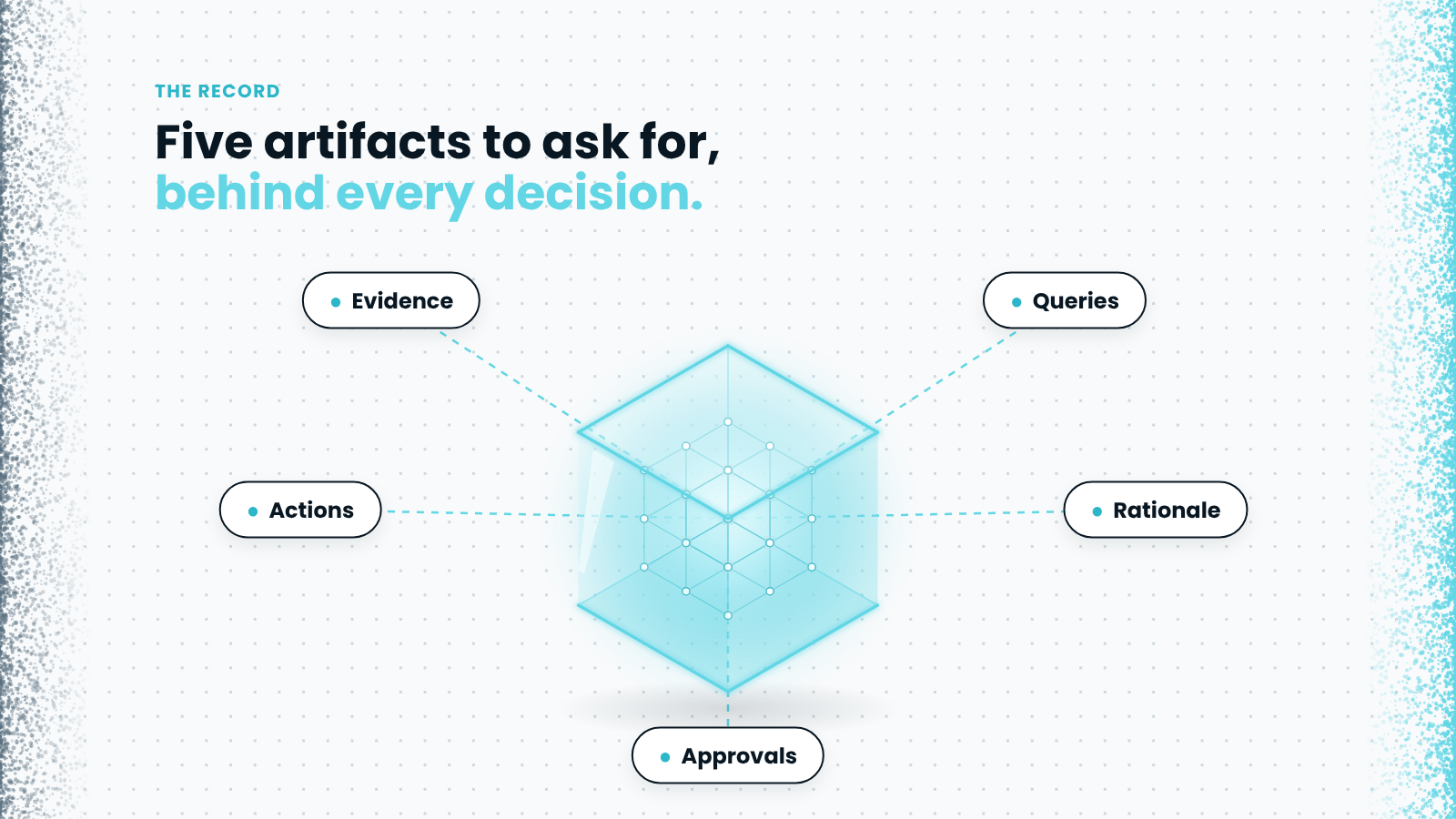
Then ask how long the record is kept, how you export it, and which model version made the call. In TENEX.AI, the reasoning behind each decision is retained, model versions are pinned in production, and the record is exportable as yours.
A record like this supports your review and audit evidence. It doesn't make you compliant on its own.
Human-led by design. Agents do the work. Named analysts own every consequential decision.
Get it in writing
Ask every vendor to put the five in writing: the metrics view, the operation, the case, the gaps and the answer. Add the record: what's kept, for how long, and how you export it.
How teams build for it
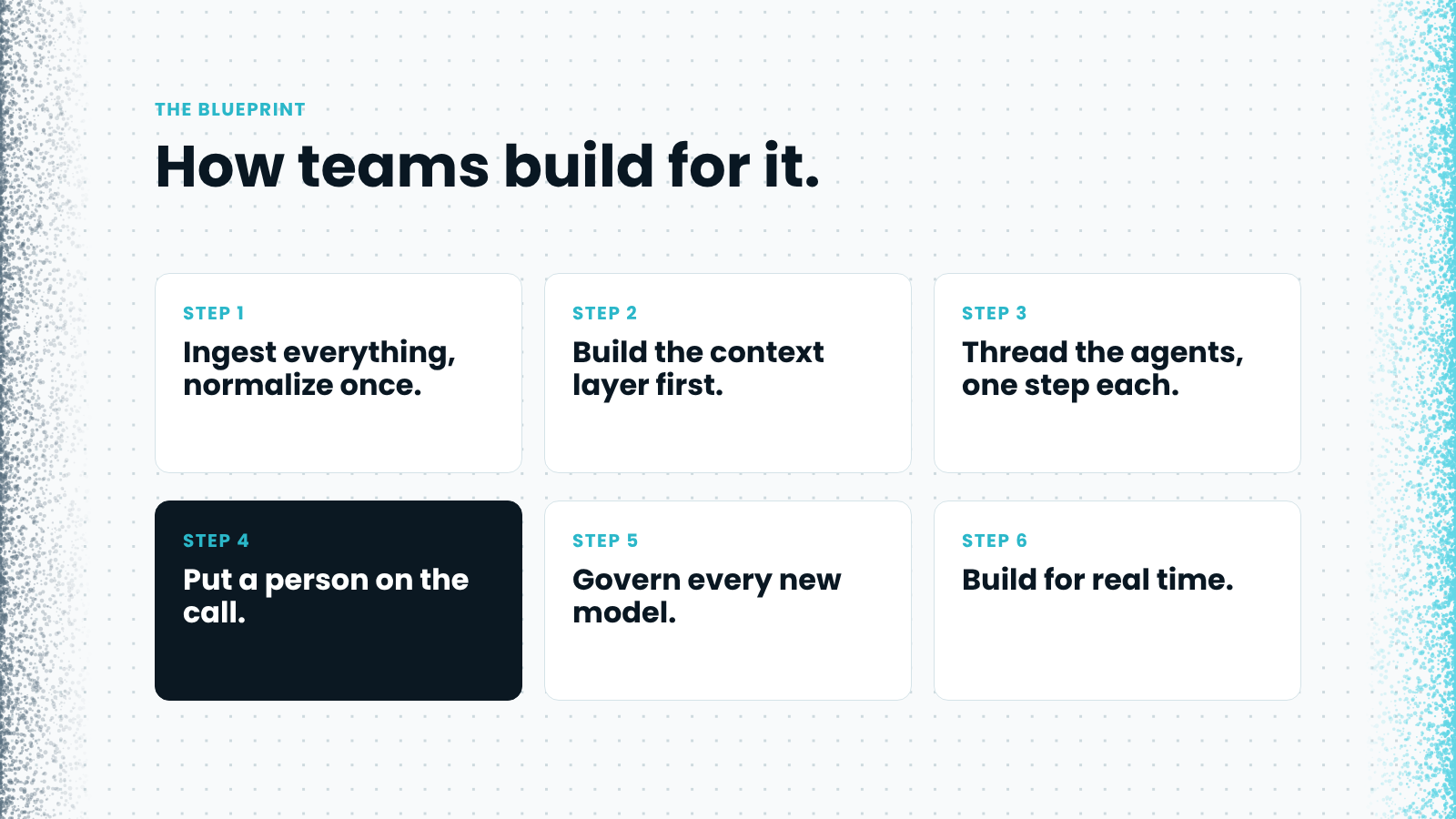
- Ingest everything, normalize once.
- Build the context layer first.
- Thread the agents, one step each.
- Put a person on the call.
- Govern every new model.
- Build for real time.
Your take-home: the Hyperattack readiness checklist
Eight questions, one copy per SOC. Record an owner and the evidence. Question five is today's test. Blank answers are your gaps.
- Telemetry volume you can analyze today, and where it breaks
- Share of data and alerts analyzed versus sampled or dropped
- How related activity becomes one investigation
- Where AI agents act and where analysts decide
- How agent decisions are explained and reviewed
- Time from first signal to a defensible conclusion
- When you were last tested against an AI-driven attack
- What changed after that test, and how it was retested
Every vendor has AI. Ask for the evidence behind one closed alert.